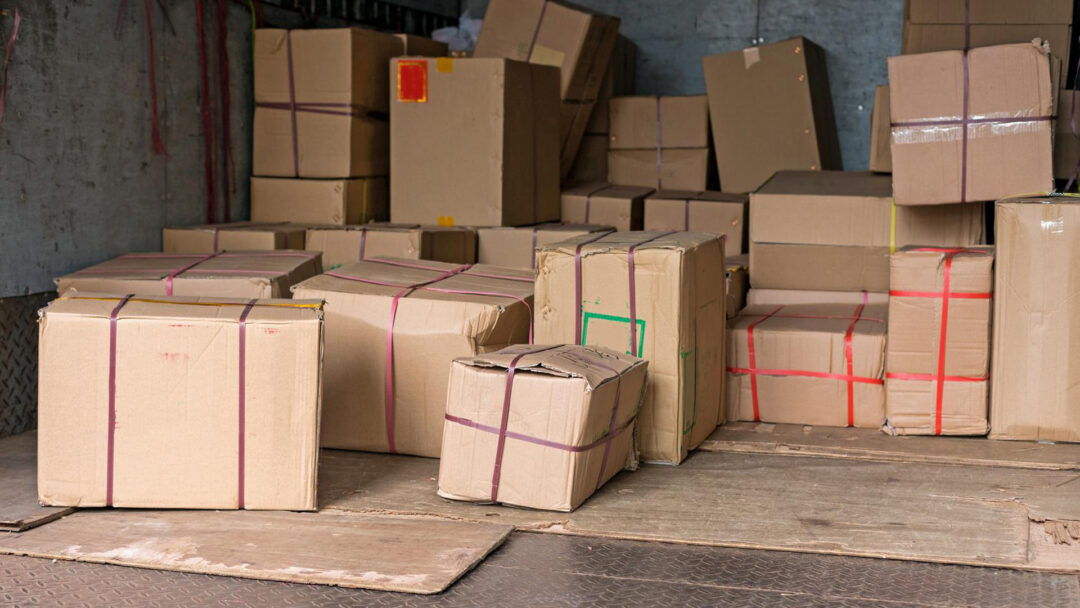
Loading a tractor-trailer is constrained by two different limits: space and weight.
Space vs. Weight
A typical 53-foot dry van has interior dimensions of roughly 52½ feet long, 8½ feet wide, and a little over 9 feet high (about 4,000 cubic feet of usable volume). But filling that entire space is not always possible. Federal highway regulations generally limit a conventional tractor-trailer to 80,000 pounds of total vehicle weight, which commonly leaves approximately 44,000–45,000 pounds available for cargo after accounting for the tractor and trailer themselves.
For very lightweight products, the problem is primarily geometric: how can a collection of differently sized rectangular boxes be arranged to make the best use of the available space?
For very dense products, geometry may barely matter. The truck can reach its legal weight limit while substantial empty space remains.
The Appliance Case
Consumer goods frequently fall between those extremes. At One Technology, we examined a fleet-planning problem for shipments of large consumer appliances. Thousands of boxed refrigerators, ranges, washers, and dryers differed in dimensions, weight, destination, and handling requirements.
The company had two linked decisions: which products should be assigned to each truck, and how should those products be arranged without exceeding space, weight, axle, loading, or delivery-sequence constraints? Optimizing only geometry could create an overweight load. Optimizing only weight could waste substantial trailer volume.
We represented each shipment's dimensions and mass along with trailer capacity and operating rules. The optimizer searched assignments across the fleet rather than producing the tightest possible packing for one vehicle in isolation. That distinction mattered because a locally impressive load could leave an awkward remainder that required an additional truck. The better fleet plan might intentionally leave a little room in one trailer to prevent much more unused capacity elsewhere.
The Result
Each percentage point improvement in average utilization reduces the overall transport costs; a large appliance company spends tens or hundreds of millions per year moving merchandise. The engagement was a compact example of the problems One Technology was built to address: each individual decision was understandable, but thousands of interacting choices made a good system-wide answer difficult to find manually.
See other Logistics: Milk